+44 7460 751919


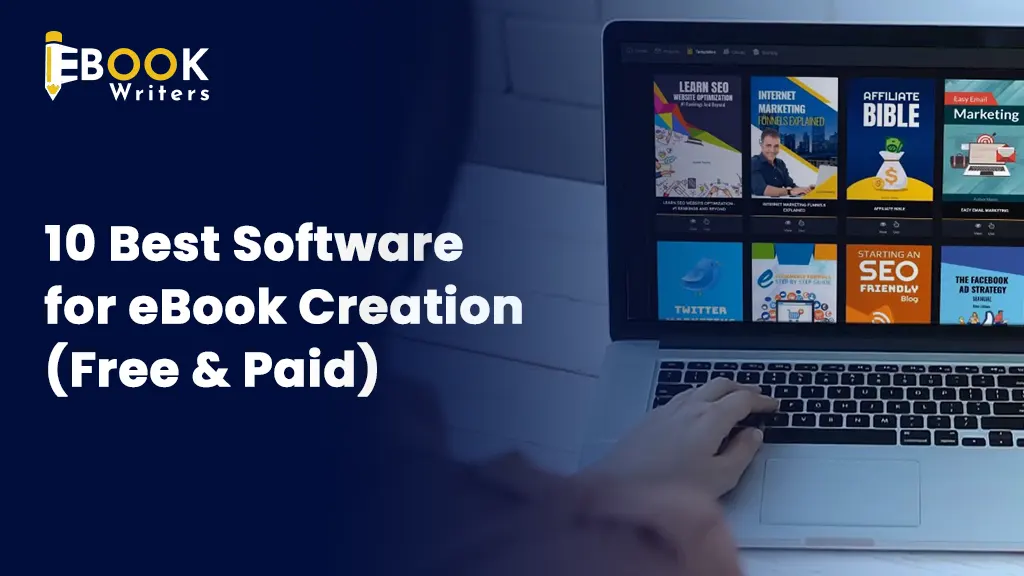
Among the hottest topics and a rising one are eBooks, providing a rich and solid platform where you can easily share your ideas into compelling digital experiences.
As per the new study, the readers of eBooks are expected to reach over 1 billion. And that is a huge number.
So, it is never too late to become a book author, and you will have a lucrative career. In order to create digital books, the better method to write them is to self-publish as an author.
This method is very much simpler than printing one. It does not matter which kind of content you want to share with your audience, like a novel, an academic paper or a piece of fiction.
Whether you are a seasoned author or a new one, publishing an eBook is a huge work, and it will take a lot of time.
To ease your journey and streamline your process, in this guide, I will talk about the 10 best software for digital books.
What is a Ebook? and How is it Created?
In essence, an ebook is an electronic book that can be read on a variety of devices, such as e-readers, tablets, smartphones, and computer screens.
You need to be aware of the changes between common formats such as EPUB, Word documents, and PDF files in order to completely grasp what eBooks are and how they appear.
Here are the essential steps of crafting an E-book.
- Planning & Writing: In the first step, use programs like Scrivener, Word, or Google Docs to write content, classify the target audience, and outline chapters.
- Formatting and Design: Now add graphics, make a clickable table of contents, and use consistent styles (Heading 1 and Heading 2).
- Cover Design: To design a digital book, use Canva, Adobe InDesign, or KD to create a visually appealing cover.
- Conversion: Convert the document to EBOOK-compatible formats, mostly PDF (fixed layout) or EPUB (reflowable text for e-readers).
Publishing & Distribution: To end with files to websites such as Sellfy, Apple Books, and Amazon KDP.
Best Tools and Software for Crafting an eBook in 2026
1. Grammarly
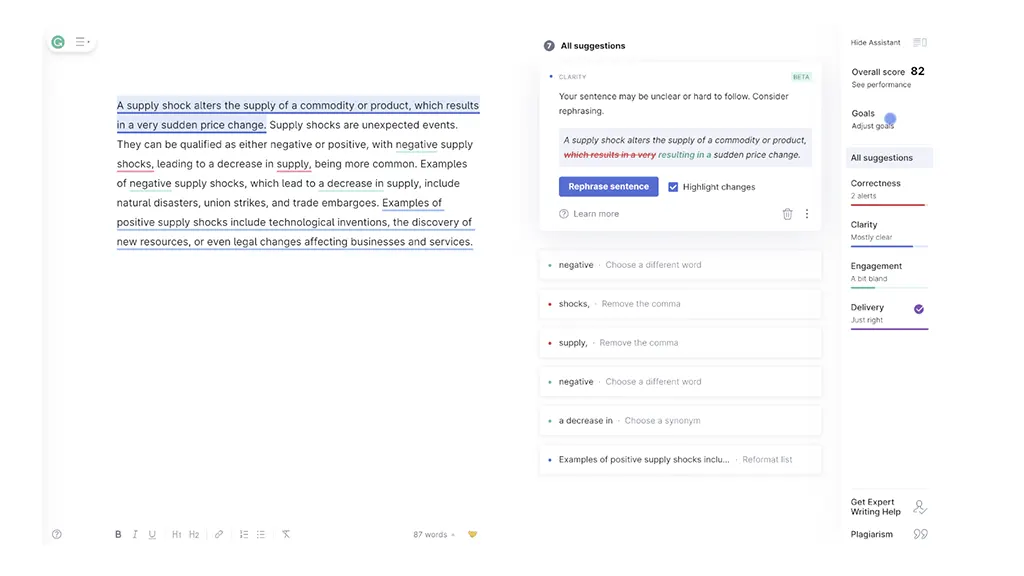
Grammarly is an application or browser extension that instantly assesses your writing on a variety of platforms, such as Facebook, WordPress, Microsoft Word, and more, for plagiarism, grammar, and spelling errors.
In fact, the name of this grammar program is your "Free Grammar Assistant.’’ Whereas the paid Grammarly has plenty of features.
Pros:
- Real-time. Once you type, a real-time grammar and spell checker rapidly detects typos and punctuation issues.
- Tone and Style Suggestions: Provides premium suggestions for enhancing tone (e.g., more formal or confident) and clarity and conciseness.
- Accessibility: Compatible with desktop software, browser extensions, and mobile devices (web browsers, email, and Microsoft Word).
To buy a premium Grammarly tool, you purchase it from the best ebook maker UK. The brand has all kinds of tools available.
Cons:
- Contextual Errors: From time to time, has trouble with subtleties, offering inapt synonyms or turning grammatically sound sentences into ones that don't make sense.
- Cost: Because the premium edition can be pricey, casual users might not find it worthwhile.
- Overcorrection: Trying to alter stylistic decisions may promote inflexible, formulaic writing.
2. Visme
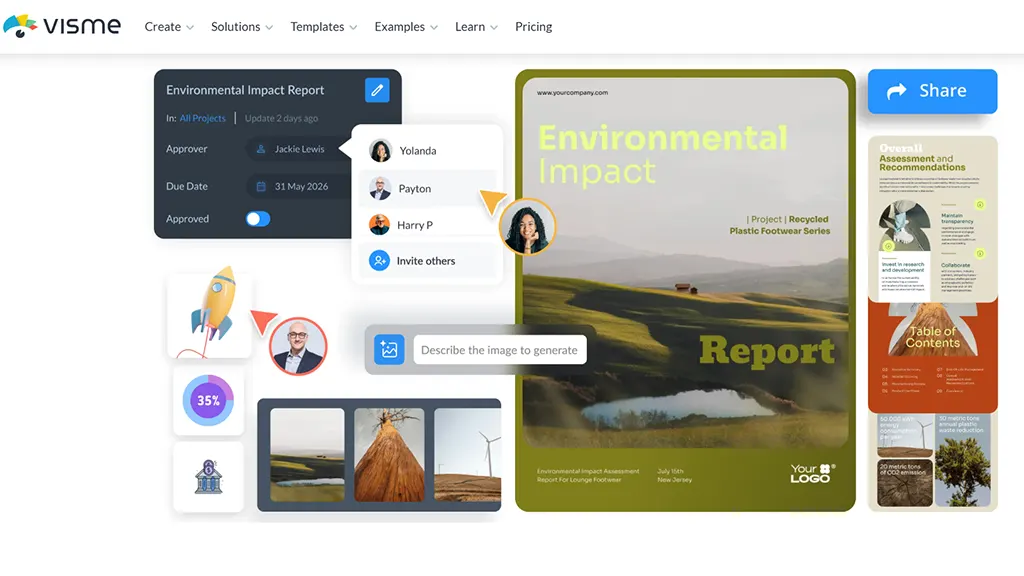
Visme is an all-in-one design platform with more than 18 million users in 133 countries. Marketers and entrepreneurs can use Visme to produce branded films, brochures, ebooks, interactive presentations, and other materials.
Pros:
- Simple to use. Users don't need to know how to code or design.
- To add your brand's font, colours, and logo to your ebook, use the Brand Wizard.
- E-books can be exported in HTML5, JPG, PNG, and PDF formats. Either embed your ebook on your website or share it online with a link.
Cons:
- The tool does not allow for grammar or punctuation editing.
- Making your own animations or altering existing ones might be hard.
- Your digital book cannot be exported to readers as an EPUB file.
If you do not want to use visme tool, just hire a quality and maven hire book writer. A good author has the qualities you need to create a quality book.
3. Google Docs
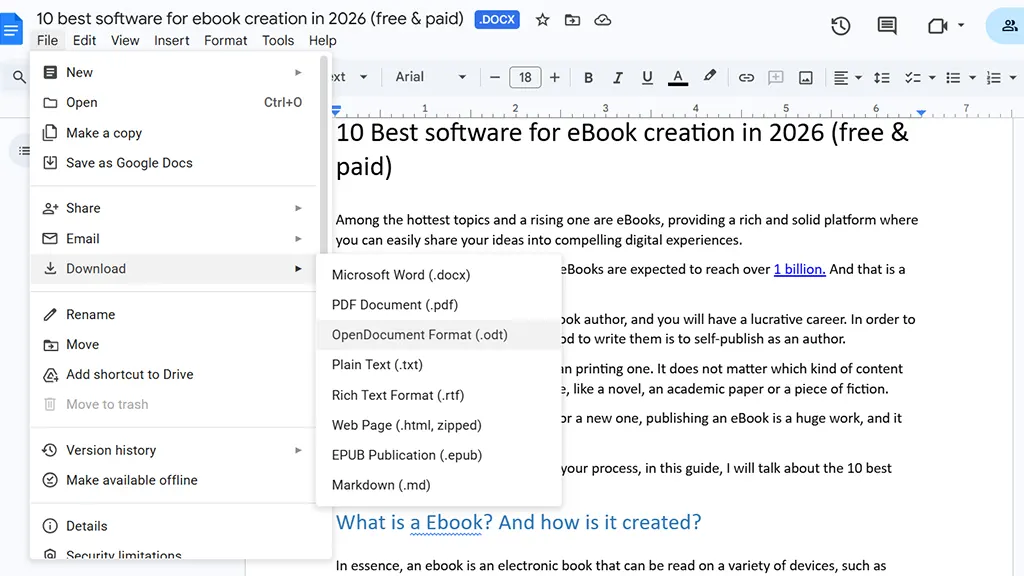
One more great and versatile look is Google Docs. The tool is simple to use; it has the cloud based features. Also, this tool aids you in accessing your manuscripts from any device.
With docs you can work with editors, beta editors and even designers. All you need to share the file with them.
Hence, you will save a lot of time in rework, as they can also include comments in real time. The tool also allows you to make an eBook in both formats, like PDF and EPUB. The great thing about this tool its free.
Pros:
- Real-time Collaboration: The best part about Google Docs is that several people can view, comment on, and edit your content at once.
- Cost & Accessibility: The tool is accessible from any internet-connected device, and it is free to use with a Google account. So, all you need to do is sign up.
- Automatic Saving: There is no chance of work being lost because changes are stored automatically.
Get Expert Ebook Writer & Editor Right Away!
Still have not figured out how to create an e-book in a Google Doc? Reach out to a professional writer. By hiring a quality writer, you will not miss anything. From writing to editing to formatting, you will learn a lot.
Get in Touch Now!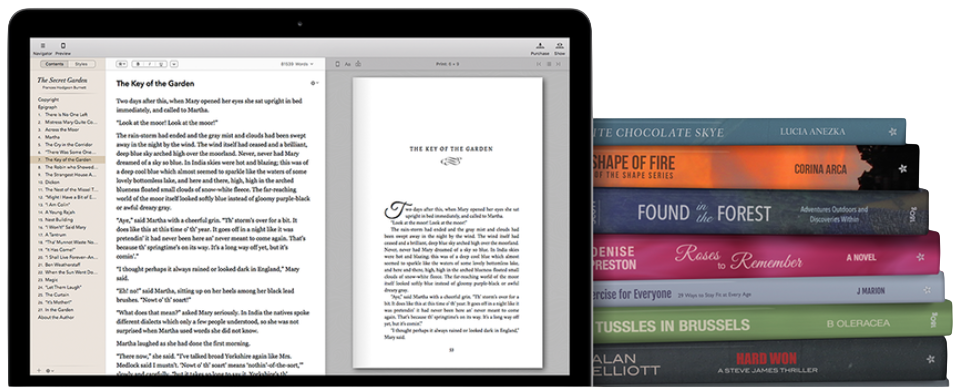
Cons:
- Limited Formatting: In contrast to Microsoft Word, it lacks classy layout, design, and formatting tools.
- Internet Dependency: Mostly cloud-based, yet there is an offline mode that is less dependable and requires setup.
- Huge File Performance: When working with huge files or ones that contain a lot of photographs, it may become laggy or slow.
4. The Scrivener
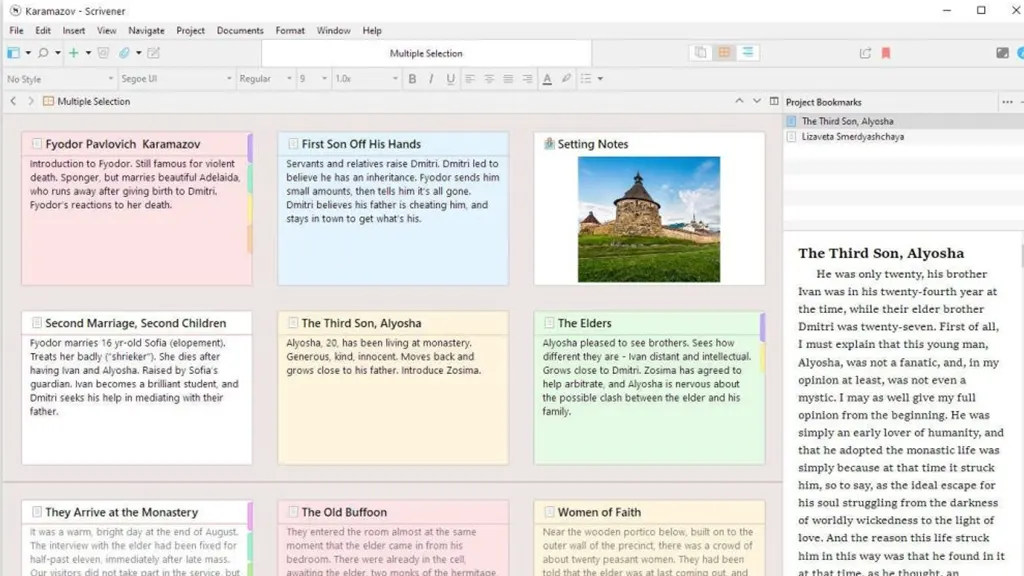
Scrivener is an effective tool for creating, organising, and editing eBooks.
Moreover, it offers all the resources required to get your work ready for submission or self-publishing.
This ebook creation software is recognised as the ideal collaborator for authors, publishers, and screenwriters.
Pros:
- Superior Organisation: Enables you to use a drag-and-drop binder to rearrange projects into manageable, discrete scenes or chapters.
- Integrated Workspace: The tool can save notes, research, photos, PDFs, and audio files in the same project as your manuscript.
- Cost-effective: The tool is available for both paid and free. So, instead of requiring a subscription, a one-time license price ($59.99 for PC, separate fee for iOS) is used.
Cons:
- Steep Learning Curve: Getting knowledge of the advanced features can be daunting at first.
- No Native Android/Web software: Mostly made for iOS, Windows, and Mac, this software does not have a native version for Android users.
- No Real-Time Collaboration: It is not for real-time editing like Google Docs or co-authoring.
5. Canva
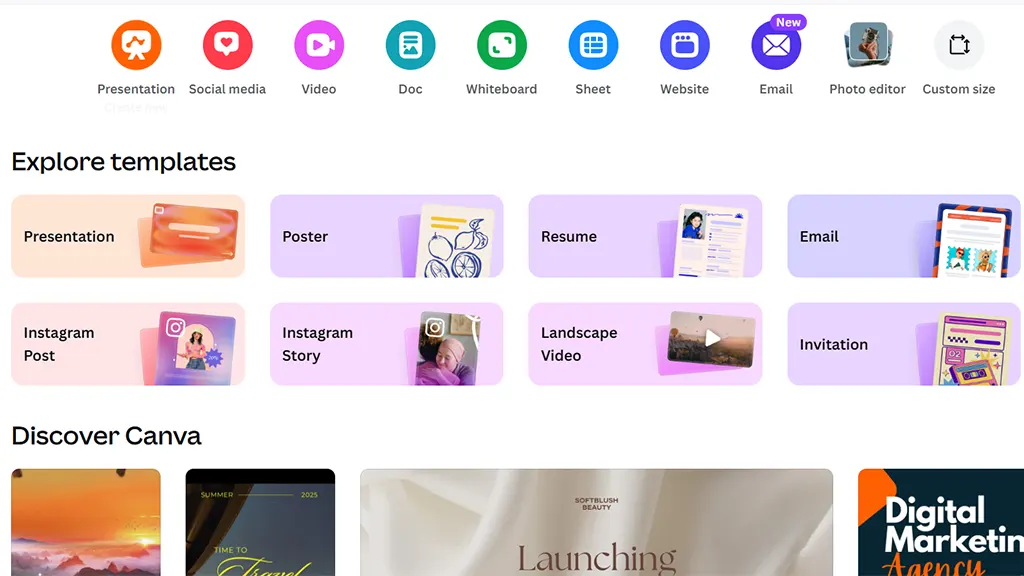
Canva is one of the best ebook tools; it is an app that enables you to create good and engaging visuals. The tool can be used for a lot of projects.
It is basically a graphic design app, and it is free to use. You can easily use it if you do not have any designing skills, compared to Adobe, which is tough to use and only made for Pro designers.
Pros:
- Easy to use. More than 250,000 free templates are available with the Free plan.
- You can quickly alter each page to reflect your branding by using the Brand Kit.
- Post your ebook on social media and monitor views, comments, and shares.
Cons:
- Only JPG, PNG, or PDF files are available for download.
- Even if it is not user-friendly, writing and modifying text within the editor is feasible.
6. Designrr
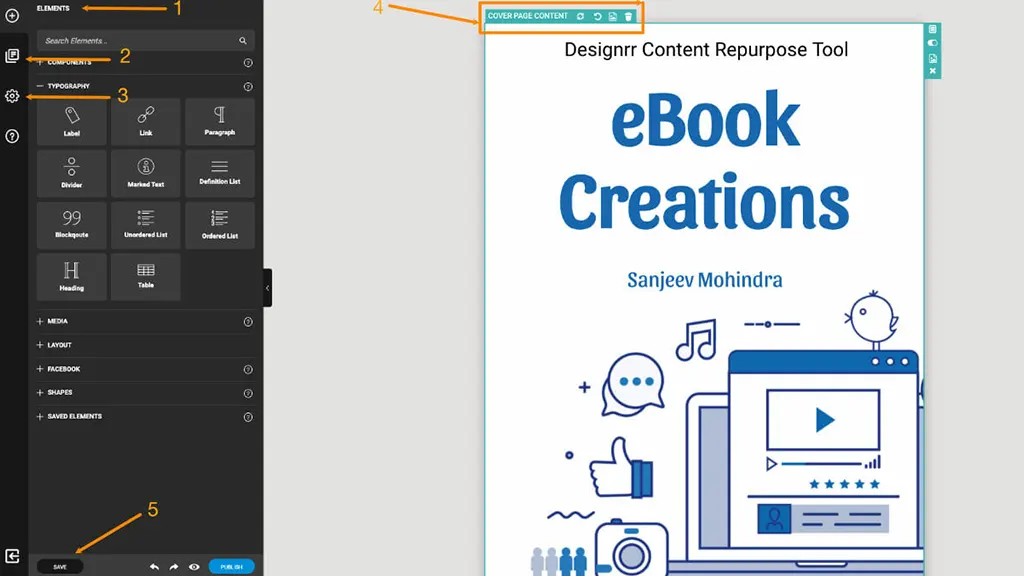
Designrr is the best software for both content marketers and creators. The software has many good features, one of which is that it can almost any content in the shape of a webpage, Google doc or any other editor.
Further, the tool can help you convert into any digital book that you can easily publish. By doing so, you can save plenty of time and money.
Pros:
- The software offers both Automated page numbering and a table of contents.
- You can import images and posts from your Facebook profile.
- You can easily convert your book into a digital one and can be exported for the Amazon Kindle, PDF, EPUB, or HTML.
Cons:
- The various price tiers and amenities that are included can be hard to grasp.
- There are fewer customisation choices than on other platforms.
6. Vellum
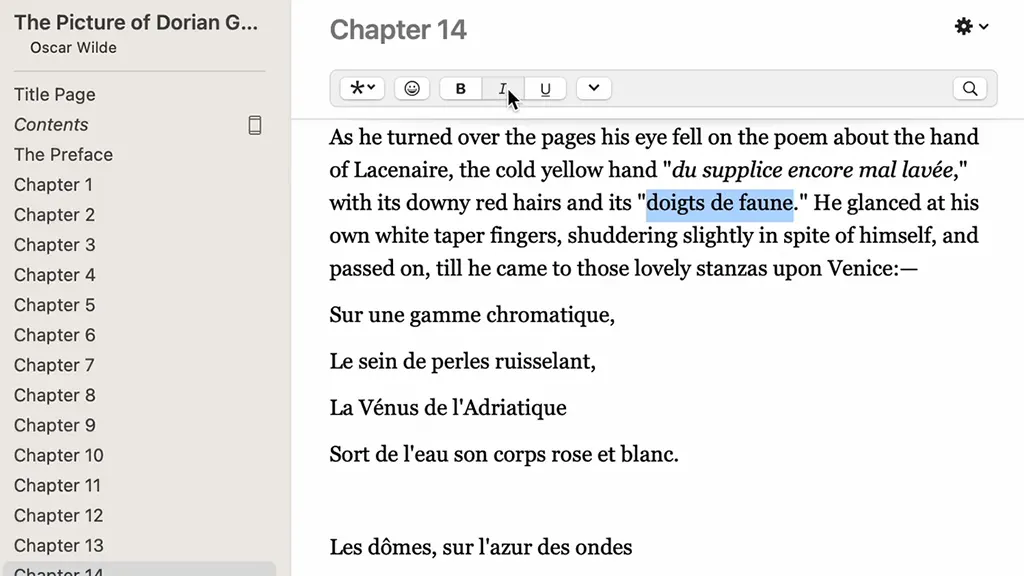
For self-publishing authors looking for an easy-to-use, effective tool to format their eBooks and print books, Vellum is perfect.
Vellum is one of the best ebook creator ideal for authors who seek expertise and design in their book layouts and wish to manage the process on their own.
Pros:
- Ideal for the formatting of print books and eBooks
- You can produce an infinite number of eBooks and only pay for them when you need to export them.
- The tool is easy to use, and there is no complication.
Cons:
- One of the cons of this tool is not available on Linux and Windows
- Not the most affordable choice available
Different pricing points for eBooks and eBooks plus print
7. Pro Writing Aid
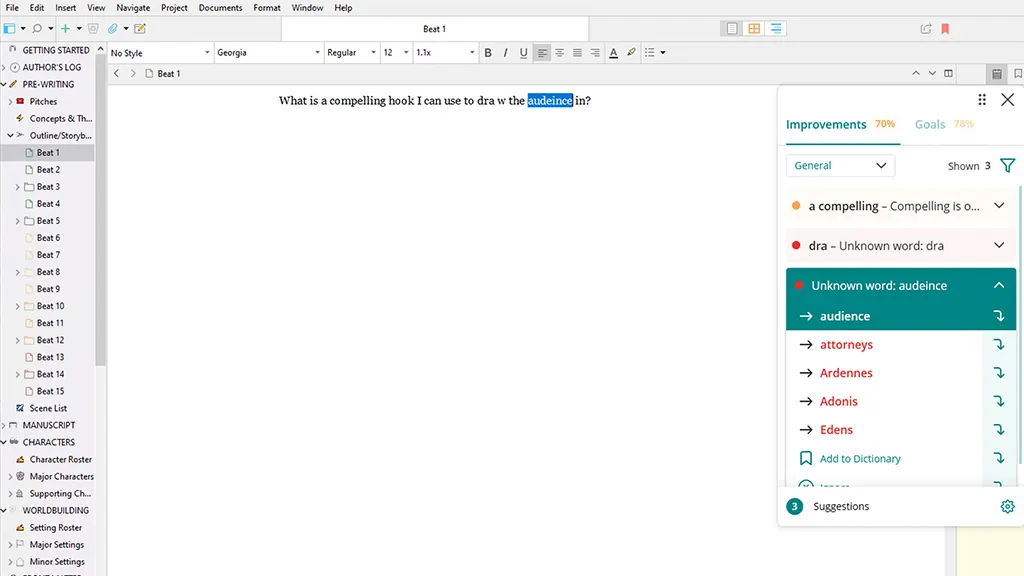
If you are having a hard time with grammar, spelling, or even writing styles Pro Writing Aid can assist you.
This ebook writing software work goes well beyond the built-in spell and grammar check. Also, you should still master grammar. However, Pro Writing Aid can help you identify patterns and evolve as a writer.
There is a great free version available. It can even be integrated into your browser or word processor, allowing you to check your grammar anywhere you write.
Pros:
- Deep editing goes beyond plain grammar and examines passive voice, sentence length, glue words, and clichés.
- Genre Specific Reports: Provides specialised reports on fiction, business, academic, and creative writing.
- Affordable Pricing: Offers a competitive lifetime membership option as well as a capable free version.
Cons:
- No Mobile App: There is no native support for Android or iOS, which limits on-the-go editing.
- Limited Free Version: Only 500 words at a time.
- Plagiarism Checker: It is only available with premium plans or as a separate add-on.
8. Atticus
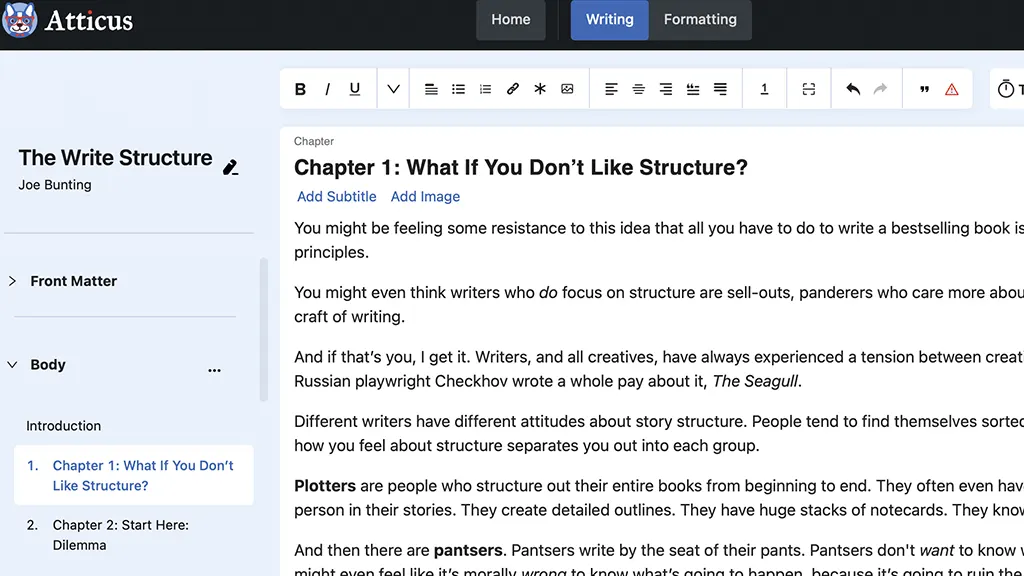
Atticus is a text processor that also functions as eBook formatting software. It has a slew of useful tools, including pre-built eBook templates, chapter planning, and daily word goals, to help you increase productivity.
Also, this ebook software operates across all devices and is less expensive than other solutions on the market - $147 for a lifetime account.
Pros:
- Cross-platform and reasonably priced: a lifetime license is $147 (as opposed to Vellum's more expensive price) and is compatible with Chromebooks, Macs, Linux, and Windows.
- User-Friendly Interface: Without expert design knowledge, formatting books is simple and intuitive.
Cons:
- Problems with performance: May take a while to load, particularly for really large manuscripts.
- No Free Version: There isn't a free tier available; it must be purchased once.
9. Kindle
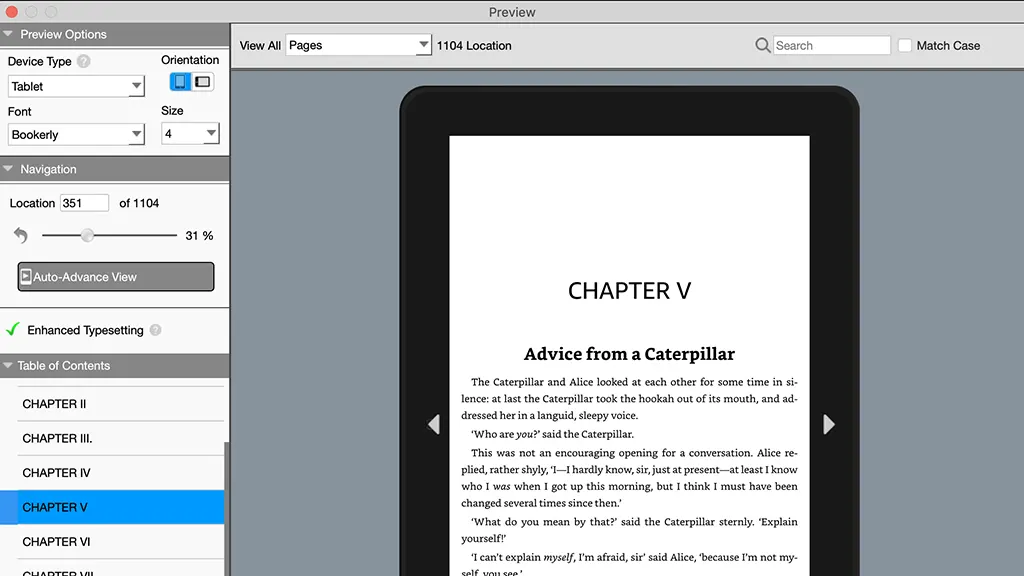
Kindle Create is a free eBook creation tool accessible for both Mac and PC. It is most suited to text-heavy books with photographs, but it may also be used to produce cookbooks and travel guides.
This software will soon include comic eBooks with a guided view, animating panels in movement to advance the tale.
Pros:
- It's simple to use.
- A free guide on using Kindle Create is available.
Cons:
- Only the KPB and KPF publication formats are exportable.
- Ideal for people who want to sell eBooks on Amazon
10. Hemingway Editor
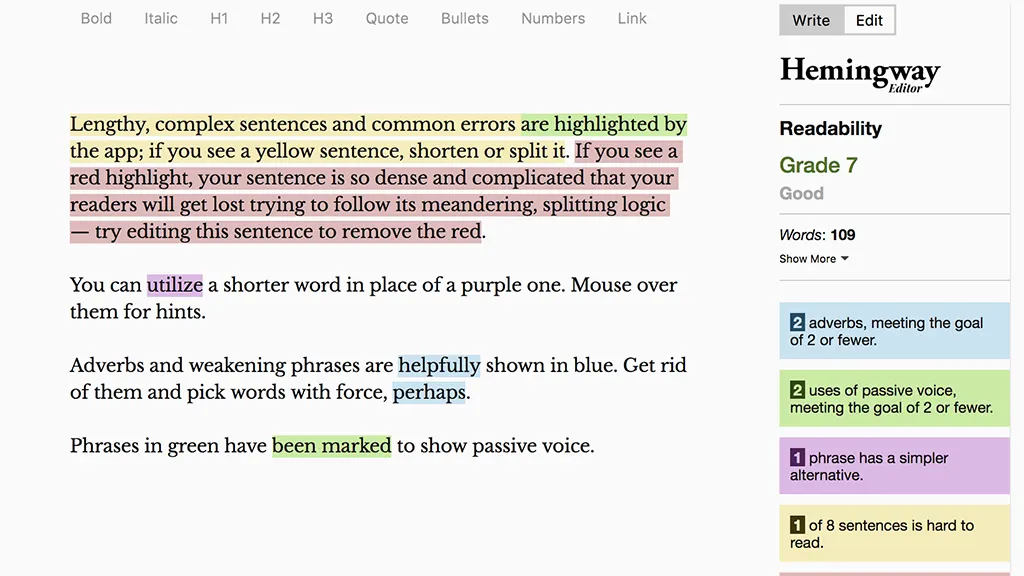
The Hemingway App aims to provide the basic, simple writing style that Ernest Hemingway pioneered.
However, it is not meant to serve as a broad editor and does not indicate the majority of spelling or grammar mistakes.
On the other hand, the app is a free ebook creator and is available on the web. The desktop version is available for both Mac (OSX 10.9+) and PC (Windows 7+) platforms and costs $19.99 one-time.
Pros:
- The tool is free; you can sign up easily
- The premium account is 19.99 USD
Cons:
- There is no plagiarism checker
- The tool does not define the tone and style of writing
Write Smarter, no harder
You do not have to write harder; it is not the 19th century. With all the tools available online, why not use them and make your ebook flow simply?
By using these 10 e-book software and tools, you will surely maximise your potential in writing, editing and proofreading.