info@ebookwriters.co.uk
 +44 7460 751919


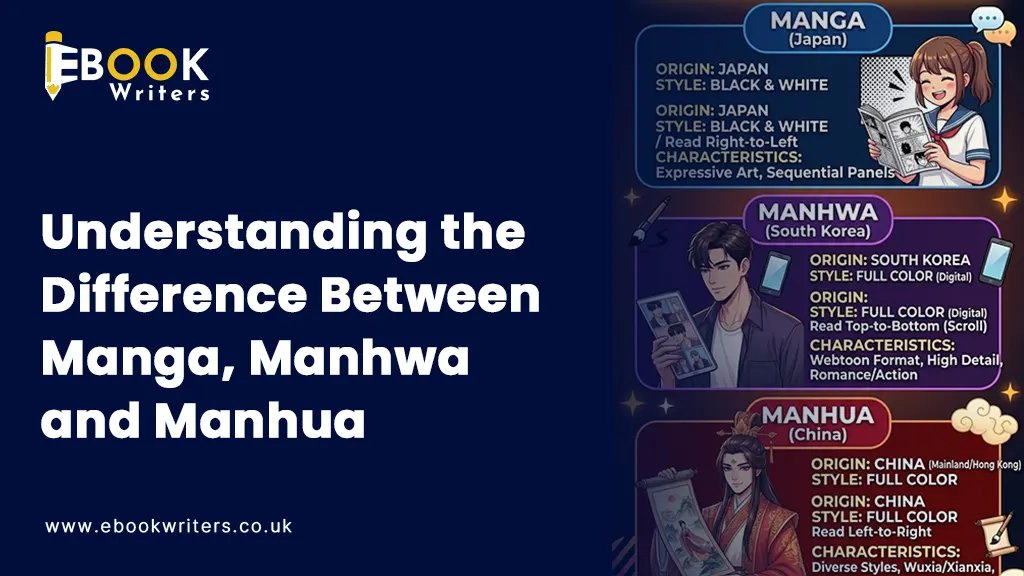
Are you an avid comic book reader? If yes, then you might be aware of the differences between manga, manhwa, and manhua. If not, then these terms might be new to you. Therefore, in this blog, we will be discussing the differences between them.
Manga, manhwa, and manhua; these terms are used interchangeably, which is wrong. This is because they have different origins, styles, storytelling, and reading formats.
The terms manga and manhwa have derived from the term manhua, which means impromptu drawings. Whether you have just begun reading East Asian comics or are already hooked on comics like Naruto or Solo Leveling, this blog will be helpful to you!
Differences Between Manga, Manhwa, and Manhua
What is Manga?
The word manga literally means “whimsical pictures”. Manga refers to the comics and graphic novels that originated in Japan. These novels are written in Japanese by a person named mangaka. Moreover, manga has a huge fan base and fame. Due to its popularity, it is easy to find English translations of manga.
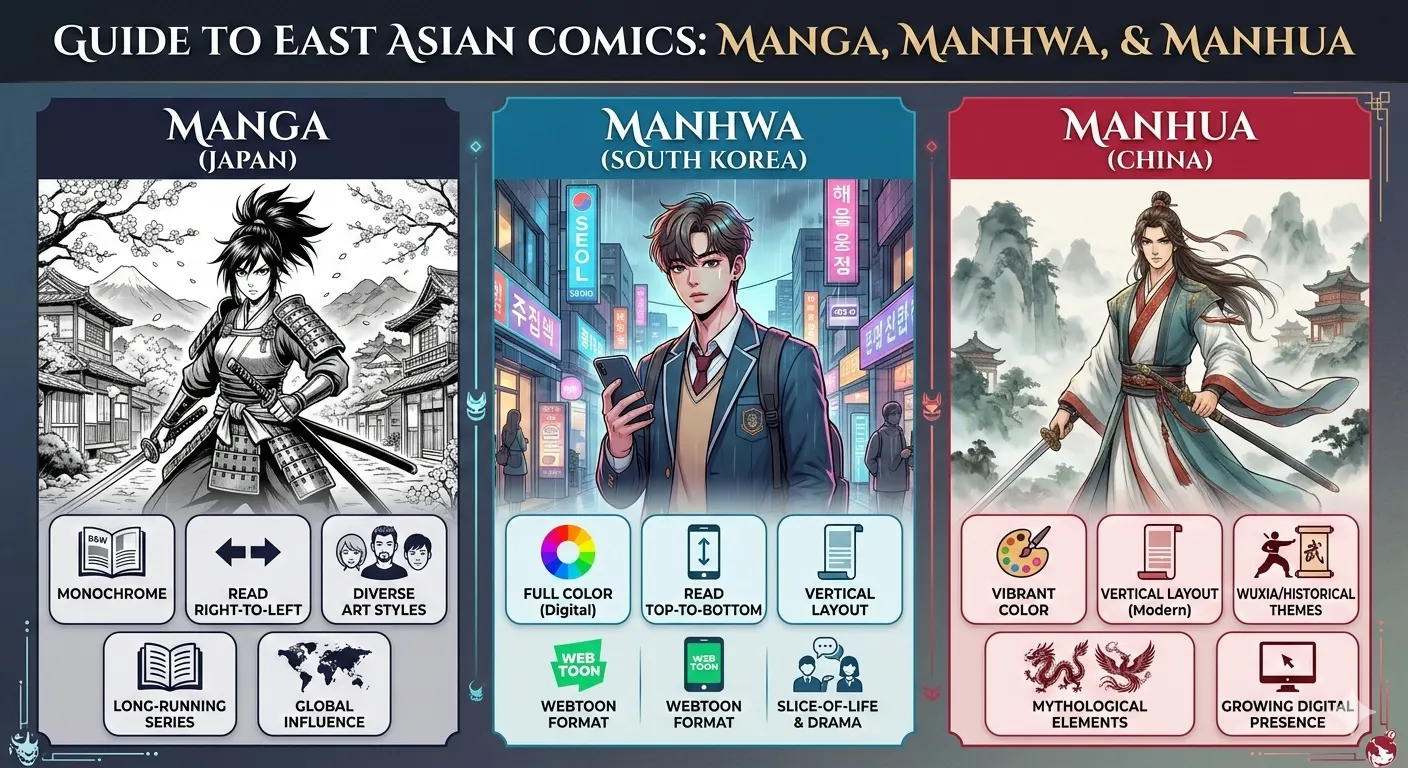
- Reading direction: right to left (traditional Japanese format).
- Genre: action and adventure, business and commerce, comedy, mystery and detective, romance, science fiction, and more.
- Art style: cartoonish-looking characters with expressive eyes and exaggerated facial expressions, detailed backgrounds, and black-and-white artwork.
- Categories according to the target audience based on age or demographics: seinen, shōnen, josei, shoujo.
- Seinen manga: this is for young adults and adult men. As the target audience includes adults, the content can be intense and diverse. It includes action, emotional growth, and fantastical elements. It is actually for mature readers.
- Josei manga: It is generally for adult women or mature female readers. These comics focus on emotional issues instead of physical ones.
- Shonen manga: the target audience of these comics is teenage boys. It mainly includes action or adventure. For example, a protagonist fighting an evil and expressing bravery etc.
- Shojo manga: It is actually for teenage girls. It generally involves romance and emotional growth instead of action and adventure.
- Manga is universally published in black and white due to the printing costs and publication expenses.
- Popular examples: Naruto, One Piece, and Attack on Titan.
What is Manhwa?
It refers to the comics that originated from South Korea, inspired by the manga. These comics are available in print as well as online and are written in the Korean language. In the past, manhwa faced a lot of struggles. Due to the government censorship of its controversial and sensitive themes, it was not able to gain popularity until the 21st century. However, now it has become popular due to modern technology. A person who creates manhwa is a "manhwaga.”
- Reading direction: left to right.
- Art style: full color illustrations in digital, whereas more often back and white in paper, long vertical scrolling forms, and clear and modern designs.
- One of the main differences between manga and manhwa is the format. Modern manhwa is published digitally as webtoons. It is designed for smartphones. Therefore, readers can easily scroll vertically instead of flipping the pages. This format actually leads to cinematic pacing, dramatic scene release, and smooth action transitions.
Webtoons have led to the popularity of manhwa, making it accessible for the reader across the globe.
- Genres/themes: fantasy romance and office drama, school life, reincarnation and revenge stories, slice of life.
- Popular examples: solo leveling, power of god, and the god of high school.
Moreover, the success of Korean pop culture has also led to the popularity of manhwa globally. If you want to craft your own manhwa, then seek guidance from book writing services.
What is Manhua?
It refers to the comics originating from China, Taiwan, or Hong Kong. It is the Chinese equivalent of the manga and manhwa, but with its own storytelling traditions and artistic influence. The person who creates manhua is known as manhuajia.
- Reading direction: traditionally left to right, but the modern version is often read left to right.
- Art style: often full color, highly detailed costumes, and fantasy settings. The colouring in manhua is more watercolour-like with more realistic-looking appearances.
- Strong influence of Chinese mythology and martial arts.
- Genre/themes:
- Wuxia: most realistic theme. It translates to martial hero. In the wuxia manhua, there is a martial arts hero who takes on challenges. It also involves supernatural powers as well as the conflict between good and evil.
- Xianxia: this theme is similar to the fantasy in the western literature. It involves magic, demons, or immortal beings.
- Historical epics.
- Fantasy adventure.
- Popular examples: The king's avatar, Soul Land, Battle Through The Heavens.
Moreover, many manhua stories are adapted from Chinese web novels, which are extremely popular online. If you have written a manhua yourself but are not sure about its publishing, then you can connect with a book editing agency.
Manga vs Manhwa vs Manhua
| Feature | Manga | Manhwa | Manhua |
|---|---|---|---|
| Origin | Japan | South Korea | China |
| Reading style | Right to left | Left to right | both |
| Color | Black and white | Full color | Mostly full color |
| Format | Printed volumes | Digital scroll (webtoon) | Digital and print |
| Themes | Action, sports, and romance | Reincarnation, fantasy | Wuxia xianxia |
| Global impact | high | Rapidly growing | Growing steadily |
| Characters | Dramatic looking | realistic | realistic |
| Volumes | Short chapters and sold in volumes | No volumes | No volumes |
Which One Should You Read?
Now, you must be clear about the differences between manga and manhwa, and manhua. The differences in these comic styles don't reflect which one is better than the other. Instead, your choice depends on your preference and taste.
- If you like Classic story telling, deep character arcs, and black and white art, then go for manga.
- If you enjoy colorful digital comics with fast pacing, then go for manhwa.
- If you like martial arts, fantasy or cultivation worlds, then go for manhua.
Final Thoughts
Now you must know that manga, manhwa, and manhua cannot be used interchangeably; they all involve storytelling but differ in origin, reading style, art, format, and theme etc. Manga represents Japan’s rich comic tradition, manhwa reflects South Korea’s digital innovation, whereas manhua represents China’s historical and mythological storytelling roots.
Each comic is unique, but together they make a strong global comic culture.